


In our first Consultant Spotlight, ClearTurn Lead Consultant Staci Harris explains why the lessons of a distribution center apply directly to health plan operations, and how she used them to steady a team through a 600% surge in enrollment and cut application turnaround from 10 days to as few as two.

At 24, Staci Harris was running a receiving dock at a 1.5-million-square-foot Target distribution center in Woodland, California. She was a management trainee leading a crew of 15, responsible for making sure merchandise came in, moved through and went out to the stores it served.
It’s not the usual starting point for a healthcare operations consultant. For Staci, it was the foundation for everything that came after.
"I made a lot of mistakes in terms of communication," she says of those first years. "My operational oversight was pretty sound, but the interpersonal part was finding that balance of building a relationship and also understanding the leadership side. Giving good, consistent feedback. Helping people develop."

Staci's interest in how things work started early. Her father has owned and operated a commercial and retail print business for over 40 years, and she started working there at 14.
"I grew up working in print shops and just knew what it was to put in a hard day's work," she says. "Ten-hour days in the summers."
At Chico State, she started in computer science before realizing she wanted more contact with people. A professor who taught operations and distribution pulled her toward production and operations management, and she added management information systems alongside it. By graduation, she knew exactly where she wanted to work: a distribution center, somewhere she "could go to work in jeans and tennies and get into the details with the different operational teams."
Over nearly seven years at Target, she went from that receiving dock to production controller for the Woodland distribution center, which supplied 65 stores. She then managed facilities and vendors for eight stores across the Sacramento Valley and led human resources for a 300-person store.
When Staci moved into healthcare, first at Blue Shield of California for 11 years, she brought one lesson from the distribution center with her.
"Health plans understand this, but they get into a vicious cycle of forgetting it," she says. "Upstream and downstream departments rely on each other. When you think of logistics and supply chain, if you have any breakdown along the way, you're unsuccessful. You haven't met the objective."
The healthcare version of a truck that never shows up, she says, often happens at the pharmacy counter.
"It's like seeing online that a product is on aisle A5 at Target, and when you get there, it's not there," she explains. "A member thinks they're buying one thing, and when they go to the pharmacy, they're paying an out-of-pocket cost they didn't expect. What you promised in your materials isn't matching what they actually have in their hands."
She saw how much depends on those handoffs while leading a migration to a new system of record for employer group clients at Blue Shield. Every field in a client record had to carry over, because a single missing authorization could mean a member arriving for surgery and the system showing no coverage or a previously approved authorization.
"Every element of that record is critical," she says. "It's about continuity of the member experience and the client experience."
After Blue Shield, Staci helped build member services and provider network operations from scratch at Primasun, a sleep health startup and joint venture between Verily and ResMed. When the venture dissolved, she got a call from Jon Murphy, a ClearTurn Managing Director who had been her manager several times at Blue Shield. She calls him "one of three people I would follow anywhere."
Jon had a client: a small regional health plan that needed help transforming its enrollment operation. Staci went in to review the people, process and technology, and to set the team up to scale.
Almost immediately, she heard a warning from the frontline enrollment team: the market was shifting, and a wave of Medicare Advantage applications was coming. Inside the organization, she saw little readiness planning.
Within weeks, the wave arrived. The plan's membership grew by roughly 600% in about 8 weeks during AEP. The enrollment team had six people, and only two were fully trained.
Every application was subject to CMS turnaround requirements.
Staci did what a production controller does. "I'm an operations person," she says. "I think about productivity, inputs and outputs. I wanted to figure out the glide path for how you would take care of these volumes." She asked how much each person could process in a day, and where the backlog data lived. No one could tell her.
So she dug into the data herself and took her findings to leadership. Shortly after, Jon called her. "He said, 'I know you were supposed to be on projects, but I think we need you to just run the operation.'"
She did. The plan pulled in 40 people from across the organization, and Staci and other leaders at the health plan broke the application process into pieces so each person could handle a defined part of it while the team kept to CMS timelines as closely as possible.
Getting through the surge was only the first step. The process was heavily manual and prone to keying errors, so Staci found and implemented a software solution to streamline it. Application turnaround time dropped from 10 days to two or three. Work that had taken three full-time employees now took one and a half. Eligibility and enrollment decisions also became much easier to track. Staci then worked with the vendor to improve its product based on what the team learned during implementation.
The engagement lasted three years. She recently stepped back to an on-call role. With half the staffing the old process required, she says the enrollment operation is now stable enough to absorb another surge of the same size without much additional hiring.
What she talks about most, though, is the team. "I consider them part of my work family," she says, "and I will be keeping in touch with them for as long as they let me!"
Staci knows process improvement makes people nervous. A team may have tried the same idea ten years ago and watched it fail. As a consultant, she also has no formal authority over the people she is asking to change.
"You have to build the trust, so they trust you through a change that could feel really uncomfortable," she says. "That's the piece that is so critical."
Her approach starts with listening: spending time with individuals and teams, understanding what trips them up, and being able to describe their daily pain back to them accurately. Then she shows progress.
"Hear them, understand them, and show material progress," she says. "Show them that you hear them and that you can move the needle."
The same principle shapes how she works with clients. "I never want to keep a client uninformed or in the dark," she says. She would rather book a quick conversation than guess. "There could be a simple element that someone can clear up for you in five minutes."
Asked what she would want a health plan executive to remember, Staci went back to the loading dock.
"Your operation will thrive if you have true cross-functional partnerships," she says, "and care for both your internal employee experience and your client or member."
It is also why she stays in an industry she admits can be frustrating. "When you go into these organizations, oftentimes the people care so much about what they do," she says. "That's all you can ask for."
It is the same quality she sees at ClearTurn. "We're very careful about who we bring on board: people with proven results and good relationships, who will do the right thing," she says. "And honestly, people who really care a great deal."
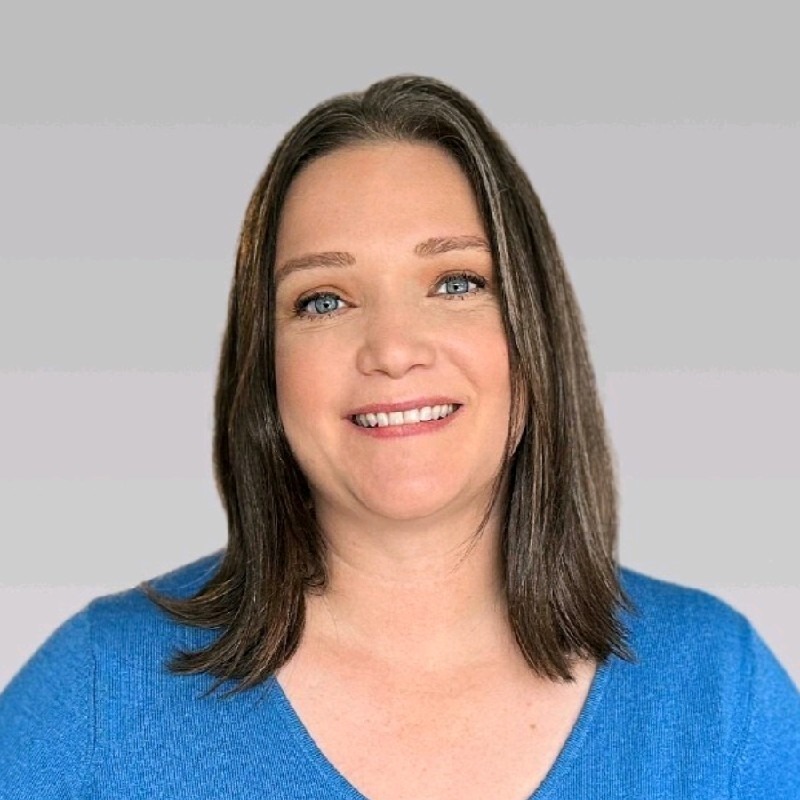
Staci Harris is a Lead Consultant at ClearTurn Consulting, specializing in business transformation and operations for health plans. She is based in Sacramento, California.
Facing a surge, a migration or a process that's stopped working? Talk to ClearTurn.
